
Difference Between Trading and Selling Personal Items: When Does HMRC Consider You to Be ‘Trading’?
With the rise of online marketplaces such as eBay, Vinted, Etsy, and Facebook Marketplace, many individuals are now selling personal belongings more frequently than ever before. However, what starts as casual decluttering can sometimes cross the line into taxable trading activity in the eyes of HMRC.
Understanding the distinction between selling personal items and carrying on a trade is essential, as it determines whether you may have an income tax liability and reporting obligations.

Selling Personal Items: Generally Not Taxable
In most cases, selling personal possessions is not considered taxable income.
This typically includes items such as:
Clothing and accessories
Furniture and household goods
Personal electronics
Items originally purchased for personal use
If you are simply disposing of items you have used yourself, any proceeds are generally capital receipts rather than trading income, and are not subject to income tax.
However, there is an important exception: the capital gains tax rules, although in practice most second-hand personal items fall within exemptions or low-value thresholds.
When Does Selling Become ‘Trading’?
HMRC may treat your activity as a trade if it becomes frequent, organised, and profit-driven.
Indicators of trading activity include:
Buying items specifically to resell at a profit
Regular and repeated sales activity
Making items for sale (e.g. crafts or clothing)
Operating with commercial intent or business-like systems
Sourcing stock rather than disposing of personal possessions
Once trading status applies, income is subject to Income Tax and potentially National Insurance, and may also require self-assessment registration.

The £1,000 Trading Allowance
The UK tax system provides a small level of relief for casual sellers through the trading allowance.
You can earn up to £1,000 per tax year from trading income without needing to declare it
If income exceeds £1,000, you must register with HMRC and declare the full amount (not just the excess, in most cases depending on circumstances)
This allowance is designed to cover small-scale, informal activity—but it is not intended for ongoing commercial operations.
The Role of Online Platforms
HMRC has increased its focus on online selling platforms. In many cases, platforms may report user activity directly to HMRC where thresholds are met.
It is therefore important to understand that:
High-volume selling activity can be visible to HMRC
Payment data may be shared under digital reporting rules
Casual selling can be reviewed if patterns suggest trading
Key Difference: Personal Use vs Commercial Intent
The fundamental test HMRC applies is intent and behaviour:
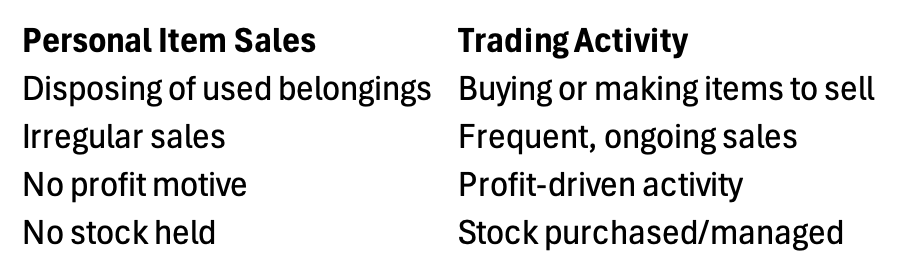
There is no single rule - HMRC considers the overall pattern of behaviour.
Common Mistakes to Avoid
Individuals often unintentionally fall into tax issues by:
Repeatedly reselling items bought cheaply for profit
Underestimating frequency of online sales
Assuming “side income” is always tax-free
Ignoring reporting obligations once activity becomes regular
Once HMRC considers you to be trading, failure to declare income can lead to backdated tax, interest, and penalties.
Final Thoughts
The distinction between selling personal items and carrying on a trade is not always obvious, particularly in the age of online marketplaces where casual selling can quickly scale.
If your selling activity is becoming regular or profit-driven, it is important to review whether you may have inadvertently created a taxable trade.
At Surrey Hills Tax, we advise individuals and business owners on HMRC trading status, online income reporting, and tax-efficient structuring to ensure full compliance while avoiding unnecessary tax exposure.
Disclaimer: This article is for general information only and does not constitute tax advice. Tax treatment depends on individual circumstances and may change.