
The Chancellor, James Murray, delivered Budget 2026 on 28 October 2026. There are no increases to the headline rates of income tax, National Insurance or VAT, and the 25% main rate of corporation tax is unchanged.
That does not mean nothing has changed. If you rent out property, hold savings outside an ISA, run a company or plan to sell a business, some of the measures will affect you directly. Most of the changes start from 6 April 2027, which gives us a useful window to plan.
There is also some genuinely good news, particularly for side hustlers, anyone who drives for work and growing companies. Below, we've picked out the measures our clients are most likely to ask about, grouped by who they affect.
Landlords and savers: higher tax rates from April 2027
The biggest personal tax change is a further rise in the rates of tax on property and savings income. Budget 2025 had already announced a 2 percentage point increase from April 2027; Budget 2026 adds another 2 points on top, from the same date.
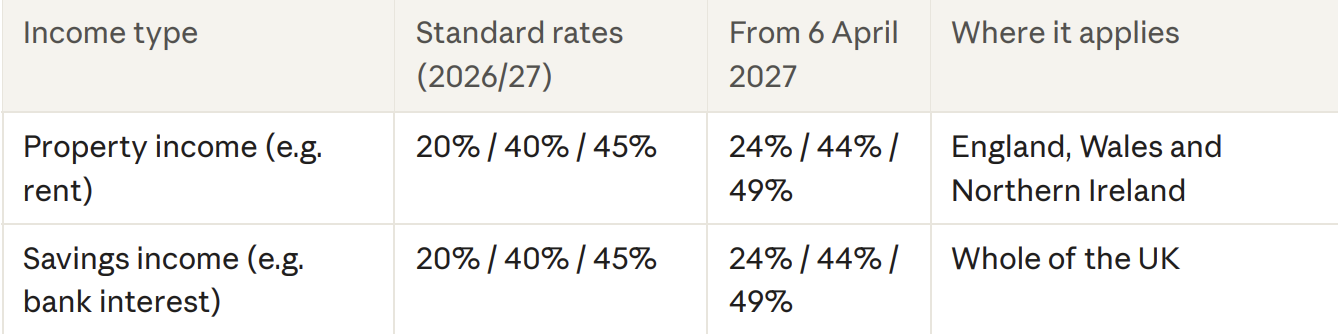
Rates shown are basic / higher / additional rate.
The Personal Savings Allowance and the starting rate for savings remain, so smaller savers will still pay no tax on their interest. The government says around 84% of income taxpayers will be unaffected.
There is better news on ISAs. The planned cut to the cash ISA allowance has been reversed, so it stays at £20,000 a year. The government will also explore a new incentive for first-time stocks and shares ISA investors, and a new First Time Buyer ISA will replace the Lifetime ISA for new savers from April 2029. In the meantime, the Lifetime ISA withdrawal charge falls from 25% to 20% for first-time buyers purchasing above the £450,000 price cap, from 29 October 2026.
What this means for you: if you are a landlord, it is worth reviewing your rental profits, finance costs and ownership structure before April 2027. If you hold significant cash savings, using your ISA allowance each year has become more valuable.
Self-employed and side hustles
Trading Allowance triples to £3,000. From 6 April 2027, you can receive up to £3,000 a year of trading and miscellaneous income tax-free, up from £1,000. This is welcome news for anyone with a small side business, such as selling online, crafting or occasional freelance work. If your income is below £3,000, you may not need to report it at all; if it is above, you can choose to deduct the allowance instead of your actual expenses.
Higher mileage rates, now permanent. The temporary 55p per mile rate for the first 10,000 business miles in a car or van has been made permanent, and the rate above 10,000 miles rises from 25p to 35p from 6 April 2027. The government estimates someone driving 15,000 business miles could save up to £300 a year.
Making Tax Digital (MTD) for Income Tax. If you join MTD in April 2027, you will not receive penalty points for late submission of your first four quarterly updates in 2027/28. The roll-out to several other taxpayer groups has been deferred until further notice. If MTD already applies to you from April 2026, nothing changes.
Looking further ahead:
From April 2029, self-assessment taxpayers who make payments on account will have to make more regular in-year payments towards their tax bill. Details are still to come.
From April 2029, eligible self-employed fathers, partners and adopters will be able to claim a new parental allowance for the first time.
Employees and employers
Mileage. The higher tax-free mileage rates above apply to employees using their own car or van for work too, whether reimbursed by the employer or claimed as tax relief.
Employment expenses. From 6 April 2028, the £2,500 threshold that currently forces larger expense claims into self-assessment will be removed. More employees will be able to claim through PAYE, but HMRC will expect evidence before relief is given, so keep your receipts.
Payrolling benefits in kind. Mandatory payrolling of company cars, vans, fuel and medical benefits has been pushed back to 6 April 2027, with the remaining benefits following from 6 April 2028. Employers should use the extra time to check their payroll software is ready.
Minimum wage. From 1 April 2027, the National Living Wage rises by 3.9% to £13.21 an hour. The rate for 18 to 20-year-olds rises to £11.27, and for 16 to 17-year-olds and eligible apprentices to £8.31.
Sponsored workers. An employer paying the Immigration Skills Charge or Certificate of Sponsorship fee will no longer be treated as providing a taxable benefit, for payments from 28 October 2026.
Company owners and businesses
Capital allowances. The main rate first-year allowance rises from 40% to 50% for spending on or after 1 January 2027, while the main rate writing-down allowance falls from 14% to 12% from April 2027. Full expensing for companies remains. In short, the tax relief on new investment is front-loaded, but relief on existing pools slows down.
Selling your business. The lifetime limit for Business Asset Disposal Relief (18% CGT rate) halves from £1 million to £500,000 for disposals from 6 April 2027. If you are planning a sale in the next year or so, the timing could make a real difference to your tax bill.
New Founders' Relief. From 6 April 2027, qualifying founders of high-growth, innovative companies will pay 10% CGT on up to £10 million of lifetime gains. The detailed qualifying conditions are still being consulted on.
Share schemes. CSOP is being renamed EMI2, and from 6 April 2027 the individual option limit doubles to £120,000, the exercise period extends to 15 years and options no longer count against the EMI limit. EMI itself gets more flexibility, including a 180-day exercise window after a disqualifying event and no separate notification when options are granted.
Company distributions. The government will reform how distributions are taxed from April 2028, aiming for consistent treatment regardless of how a transaction is structured. Capital treatment will be protected for genuine changes of ownership, including family successions. Draft legislation is due in 2027; we will update you once the detail is published. Separately, the proposed new reporting of company payments to directors and shareholders will not go ahead for now.
R&D tax relief. The Claim Notification Form will be removed from 1 April 2027, and the Additional Information Form simplified from autumn 2027.
VAT and administration:
Online sellers: from October 2027, online marketplaces will collect VAT on sales by UK VAT-registered businesses, and other UK businesses selling over £90,000 a year per platform. Personal sales, second-hand goods and business-to-business sales are excluded.
Overseas services: from April 2027, the VAT reverse charge will only apply to VAT-registered businesses. Overseas suppliers selling services to non-registered UK businesses will have to charge VAT.
E-invoicing: VAT invoices must be issued in a specified electronic format from 1 April 2029.
Direct debits: from April 2029, businesses will need a direct debit in place for VAT and PAYE liabilities.
Correcting errors: from 1 April 2028, new rules will require taxpayers to correct returns once inaccuracies are found.
Business rates (England). From 1 April 2027, Small Business Rate Relief thresholds for retail, hospitality and leisure properties rise to £18,000 (100% relief) and £21,000 (tapered relief), and relief for pubs, social clubs and live music venues increases to 35%.
Pensioners, families and estates
New Pension Tax Allowance. From 6 April 2027 until 5 April 2030, pensioners whose total income is no more than the full new State Pension will not have to pay small amounts of income tax. The allowance tapers away for those with income just above that level.
Pension death benefits. From 28 October 2026, the "two-year rule" for the taxation of pension and lump sum death benefits has been removed.
Inheritance tax and trusts. For deaths and other chargeable events from 28 October 2026, new rules restrict when liabilities connected to trust property can reduce the value of an estate. If you have a trust or have borrowed against assets held in one, it may be worth a review.
Child Benefit. HMRC will automatically offset Child Benefit overpayments against the High Income Child Benefit Charge, cutting down on unnecessary payments and repayments.
Cost of living support. Households in England in council tax bands A to D will receive a £100 Household Energy Payment from January 2027. VAT on domestic electricity is cut to 0% until 1 July 2027, and the 5p fuel duty cut is extended to the same date.
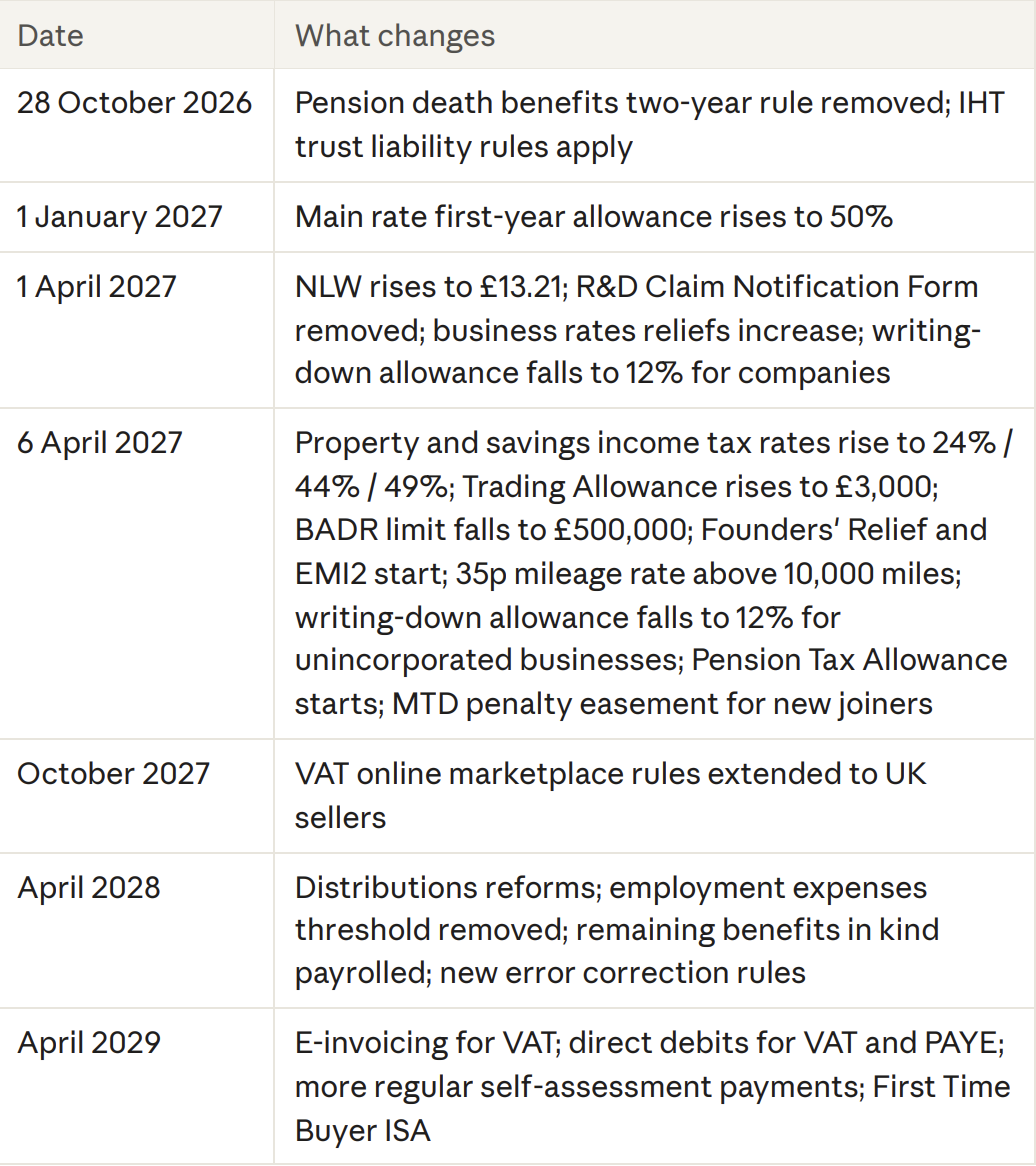
Key dates at a glance
What to do now
Most of these changes don't bite until April 2027, so there is time to plan, but not time to leave it. Five things worth doing before then:
Landlords: review your rental profits and how your properties are owned before the higher rates arrive.
Savers: make full use of your £20,000 ISA allowance, and check whether interest is pushing you over your Personal Savings Allowance.
Business owners thinking of selling: consider whether a disposal before 6 April 2027 could preserve the £1 million BADR limit.
Side hustlers: check whether the new £3,000 Trading Allowance means you no longer need to report your income, or whether claiming actual expenses still works out better.
Companies planning investment: think about the timing of equipment purchases around 1 January 2027, when the first-year allowance rises to 50%.
Every situation is different, and many details will only be confirmed when the Finance Bill is published. If you would like to talk through how Budget 2026 affects you, get in touch to book a free 15-minute intro call.
This article is a summary of the Budget 2026 announcements made on 28 October 2026 and is for general information only. It is not tax advice, and the measures may change before they become law. Please speak to us before acting on anything here.